How Drone-Led Infrastructure Inspection Reduced Inspection Time by 70% for a State Power Utility
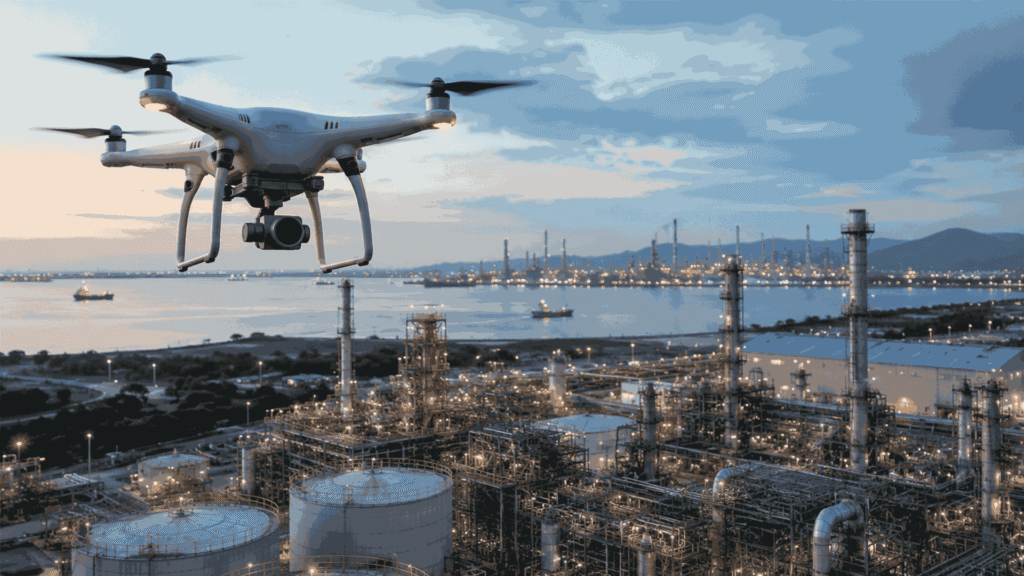
Overview
As India rapidly modernizes its infrastructure, utilities and public-sector organizations are under increasing pressure to improve operational efficiency, reduce downtime, and strengthen asset monitoring capabilities.
Traditional inspection methods for critical infrastructure such as transmission lines, substations, and remote energy assets are often time-consuming, resource-intensive, and dependent on manual field surveys. In many cases, inspections involve difficult terrain, safety risks, and operational disruptions.
A leading state power utility in South India faced similar challenges while managing a large network of transmission infrastructure spread across urban and remote geographies.
To modernize its inspection and monitoring capabilities, the organization partnered with Magellanic Cloud Limited to deploy an AI-enabled drone inspection ecosystem powered through advanced aerial intelligence and real-time analytics.
The initiative transformed infrastructure inspection from a manual, reactive process into a faster, safer, and data-driven operation.
Within months of deployment, the utility significantly reduced inspection timelines, improved operational visibility, and strengthened preventive maintenance capabilities.
The Client
The client is a large state-level power utility responsible for managing electricity transmission and distribution infrastructure across multiple districts.
Its operations include transmission towers, substations, high-voltage power lines, and critical grid infrastructure supporting millions of consumers.
With increasing energy demand and expanding infrastructure networks, the organization required a scalable monitoring system capable of improving asset visibility while minimizing operational inefficiencies.
The Challenge
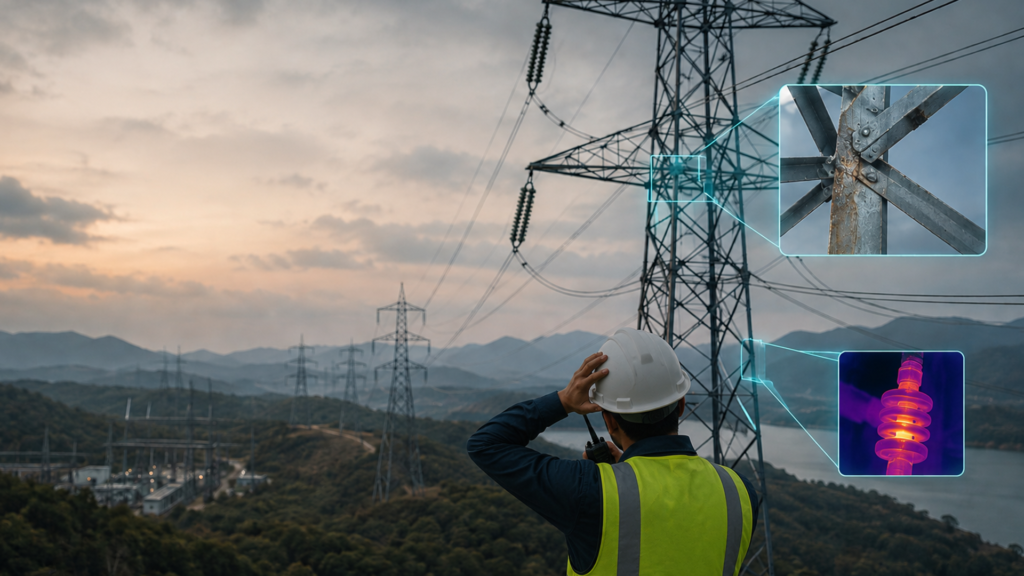
- When Manual Inspections Become a Bottleneck – The utility relied heavily on traditional infrastructure inspection methods involving field engineers and manual surveys. However, as infrastructure networks expanded, several operational challenges began affecting efficiency and maintenance planning.
- Time-intensive inspection cycles –Inspecting transmission towers and power lines across large geographies required extensive manpower and scheduling.
- Limited visibility into remote infrastructure –Many assets were located in difficult-to-access terrains, making regular inspections operationally challenging.
- Safety risks for field personnel –Manual inspections exposed engineers and maintenance teams to high-risk environments, particularly around elevated structures and high-voltage systems.
- Delayed fault identification – Potential risks such as structural corrosion, vegetation intrusion, thermal anomalies, and equipment wear were often detected late, increasing the possibility of outages.
- Reactive maintenance approach – Without real-time infrastructure intelligence, maintenance activities were largely reactive rather than preventive. The organization needed a technology-driven solution capable of accelerating inspections while improving accuracy, visibility, and operational safety.
The Solution
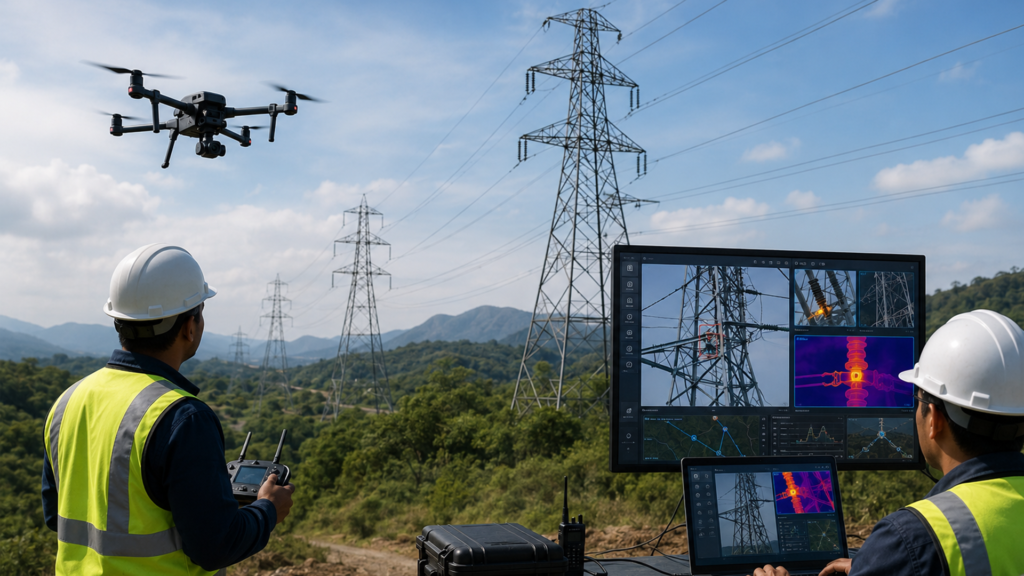
AI-Enabled Drone Inspection Ecosystem
To address these challenges, Magellanic Cloud Limited implemented an intelligent drone-based infrastructure inspection platform designed to enable rapid aerial monitoring and AI-driven asset analysis.
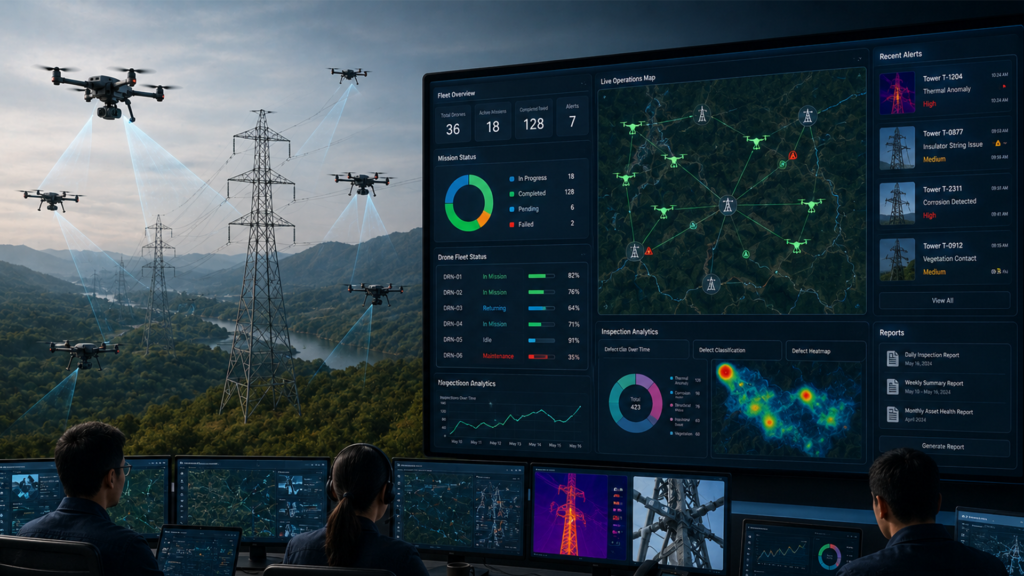
The solution combined autonomous drone operations, high-resolution imaging, thermal analytics, and centralized monitoring capabilities.
Key Capabilities Implemented
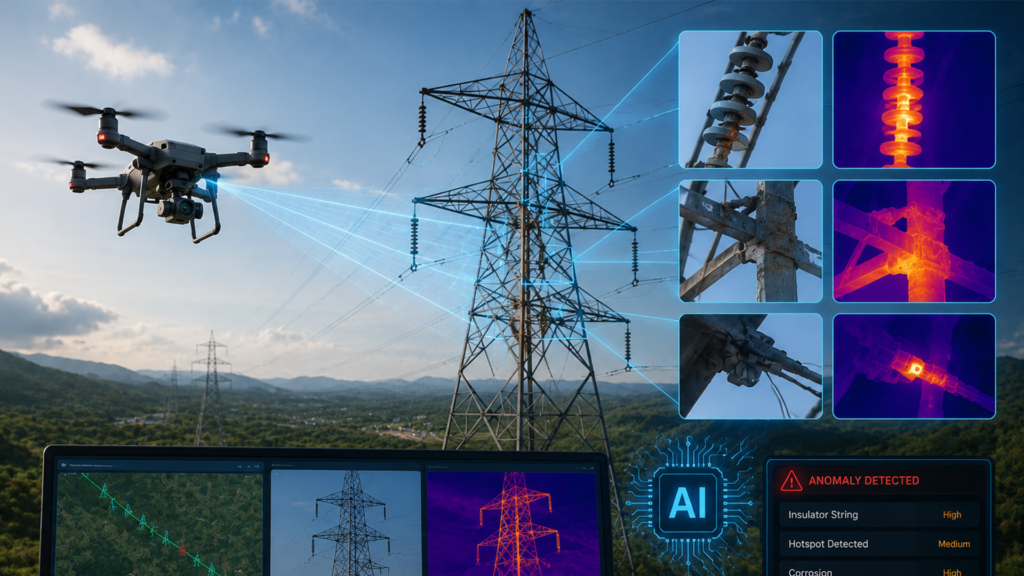
- Autonomous Drone-Based Inspections – Advanced drones were deployed to inspect transmission corridors, substations, and high-voltage infrastructure with minimal manual intervention. These drone systems enabled faster inspection coverage across large operational areas.
- High-Resolution Visual Intelligence – Drones captured detailed visual data capable of identifying:
- Structural damage
- Corrosion
- Loose fittings
- Vegetation intrusion
- Surface abnormalities
This improved infrastructure visibility significantly compared to conventional inspections.
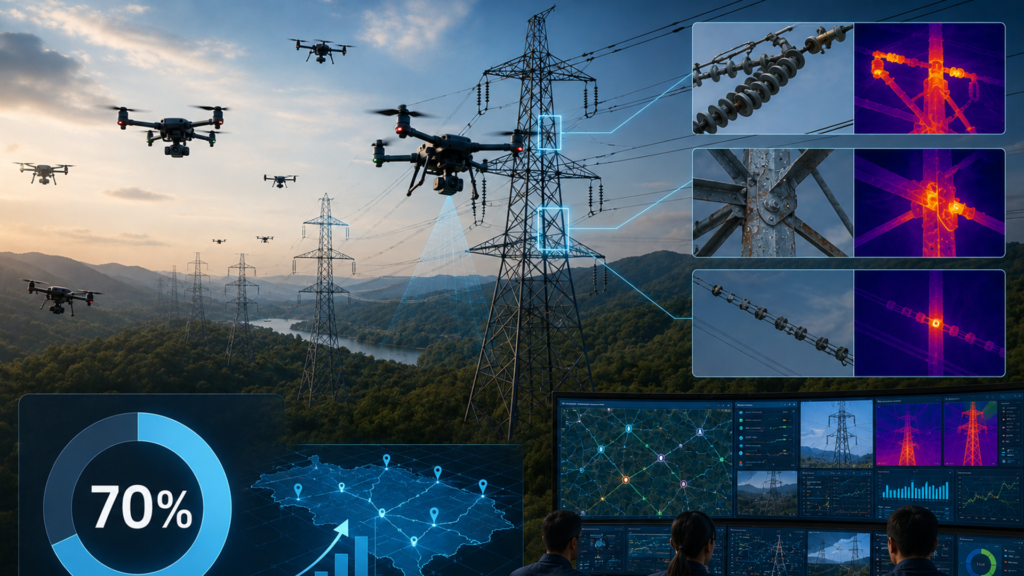
3. Thermal Imaging and Anomaly Detection – Thermal analytics helped identify heat signatures and potential electrical faults
before failure events occurred. This enabled predictive maintenance planning and minimized operational risk.
4. AI-Powered Analytics –Artificial intelligence models analyzed inspection data to detect anomalies and classify risk
levels automatically. The system reduced manual analysis time and improved inspection accuracy.
5. Centralized Monitoring Dashboard – All inspection data was integrated into a centralized dashboard, enabling utility operators to:
- Monitor infrastructure health
- Prioritize maintenance activities
- Track inspection reports
- Generate actionable insights in real time
Implementation
Building a Scalable Inspection Framework
The project was executed through a phased deployment strategy to ensure operational continuity.
Phase 1 – Infrastructure Mapping
The engagement began with a detailed assessment of transmission assets and inspection priorities. Critical infrastructure zones and high-risk locations were identified for drone inspection deployment.
Phase 2 – Drone Operations Deployment
Drone systems equipped with high-resolution optical and thermal sensors were deployed across selected infrastructure corridors. Standardized flight paths and inspection protocols were established to ensure consistency and compliance.
Phase 3 – AI Analytics Integration
AI models were configured to analyze captured inspection data and automatically identify infrastructure anomalies. This significantly reduced the dependency on manual inspection analysis.
Phase 4 – Centralized Reporting and Monitoring
Inspection data and reports were integrated into a centralized monitoring environment accessible to utility administrators and maintenance teams. This enabled faster decision-making and maintenance planning.
Phase 5 – Workforce Enablement
Operational teams were trained on drone operations, analytics interpretation, and maintenance workflows. The deployment created a sustainable digital inspection framework capable of supporting future infrastructure expansion.
The Impact
Faster Inspections, Smarter Maintenance, Better Visibility
Within six months of implementation, the utility experienced significant operational improvements.
- 70% reduction in inspection time – Drone-enabled inspections accelerated infrastructure assessment cycles across large geographies.
- Improved fault detection accuracy – AI-driven analytics enabled earlier identification of infrastructure anomalies.
- Enhanced workforce safety – Reduced dependency on manual high-risk inspections minimized safety exposure for field engineers.
- Better preventive maintenance planning – Thermal imaging and predictive analytics improved maintenance scheduling and reduced unexpected downtime.
- Increased operational visibility – Centralized dashboards enabled real-time monitoring of asset health and inspection activities.
Business Impact
Beyond operational efficiency, the transformation strengthened the utility’s long-term infrastructure management strategy.
Inspection cycles that previously required extensive manpower and prolonged field activity could now be completed significantly faster through autonomous aerial monitoring.
The organization also improved its ability to prioritize maintenance investments based on real-time infrastructure intelligence.
Most importantly, the deployment established a scalable foundation for future smart utility initiatives, including predictive asset management and intelligent grid monitoring.
Why It Matters
As India continues investing in energy infrastructure modernization, utilities must adopt intelligent monitoring systems capable of improving efficiency while reducing operational risks.
Drone-enabled inspection ecosystems provide organizations with:
- Faster infrastructure assessment
- Improved operational safety
- Real-time asset visibility
- Predictive maintenance capabilities
- Reduced inspection costs and downtime
By integrating aerial intelligence with AI-driven analytics, organizations can move from reactive infrastructure management to proactive operational resilience.
Looking Ahead
The future of infrastructure management will increasingly depend on autonomous systems, predictive analytics, and real-time intelligence.
Utilities that embrace drone-led inspection frameworks today will be better positioned to manage growing infrastructure complexity while improving service reliability and operational efficiency.
Through this transformation initiative, Magellanic Cloud Limited demonstrated how intelligent aerial technologies can modernize critical infrastructure operations and accelerate the shift toward smarter, more resilient utilities.
Transform Infrastructure Monitoring with Intelligent Drone Operations
Discover how AI-powered drone ecosystems can improve inspection efficiency, strengthen asset visibility, and enable predictive infrastructure management.
Connect with our experts to explore the future of intelligent utility operations.