Building a Smart Command Center for a City: Real-Time Decisioning at Scale

Overview
As India accelerates its urban transformation under the Smart Cities Mission, cities are being reimagined as connected, data-driven ecosystems. The vision extends beyond infrastructure toward intelligent governance, real-time responsiveness, and citizen-centric service delivery.
A rapidly growing Tier-2 city in South-Central India faced the challenge of managing increasing urban complexity, ranging from traffic congestion and public safety to emergency response and civic service coordination.
To address these challenges, the city partnered with Magellanic Cloud Limited to design and implement a city-wide Integrated Command and Control Center (ICCC) powered by Scanalitix.
The objective was clear: transform fragmented city operations into a unified, intelligent command ecosystem capable of real-time decision-making at scale.
The City Context
The city, with a population exceeding one million, was experiencing rapid urban expansion driven by industrial growth, increased mobility, and rising citizen expectations.
However, its governance systems were largely fragmented. Traffic management, law enforcement, municipal services, and emergency response systems operated independently, often relying on manual processes and delayed communication.
This fragmentation created inefficiencies that impacted both governance effectiveness and citizen experience.
The Challenge

Urban administrators faced multiple systemic challenges:
- Fragmented operational systems: Different departments operated in isolation, with no centralized platform to monitor or coordinate activities across the city.
- Delayed response to incidents: Traffic violations, public disturbances, and emergency situations often required manual intervention, resulting in slower response times.
- Limited real-time visibility: City authorities lacked a unified view of events unfolding across key zones such as intersections, public spaces, and critical infrastructure.
- Inefficient resource deployment: Without data-driven insights, deploying field teams for incident response or civic maintenance was often reactive rather than proactive.
- Scaling challenges under Smart Cities Mission: While the city had begun adopting digital initiatives, it lacked a scalable architecture aligned with the long-term vision of the Smart Cities Mission.
The need was not just for technology, but for a centralized intelligence layer that could unify, analyze, and act on city-wide data in real time.
The Solution
A Unified ICCC Powered by Scanalitix
To address these challenges, Magellanic Cloud Limited deployed a city-wide Integrated Command and Control Center (ICCC) using its unified platform, Scanalitix.
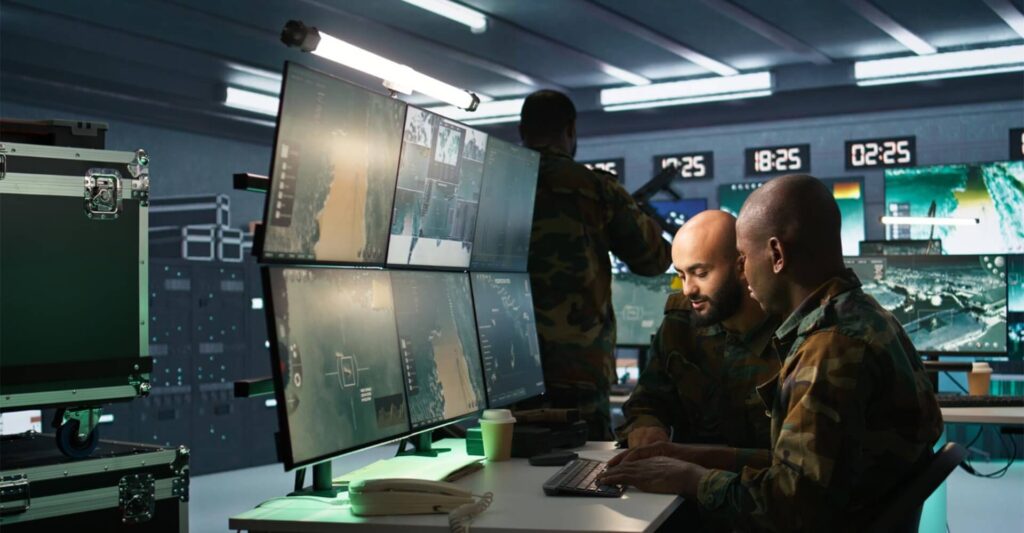
The ICCC was designed as the central nervous system of the city, bringing together multiple data streams into a single, intelligent interface.
Key Capabilities Implemented
- Centralized monitoring and control: All city surveillance feeds, traffic systems, and civic infrastructure data were integrated into a unified command center, providing a single pane of glass for administrators.
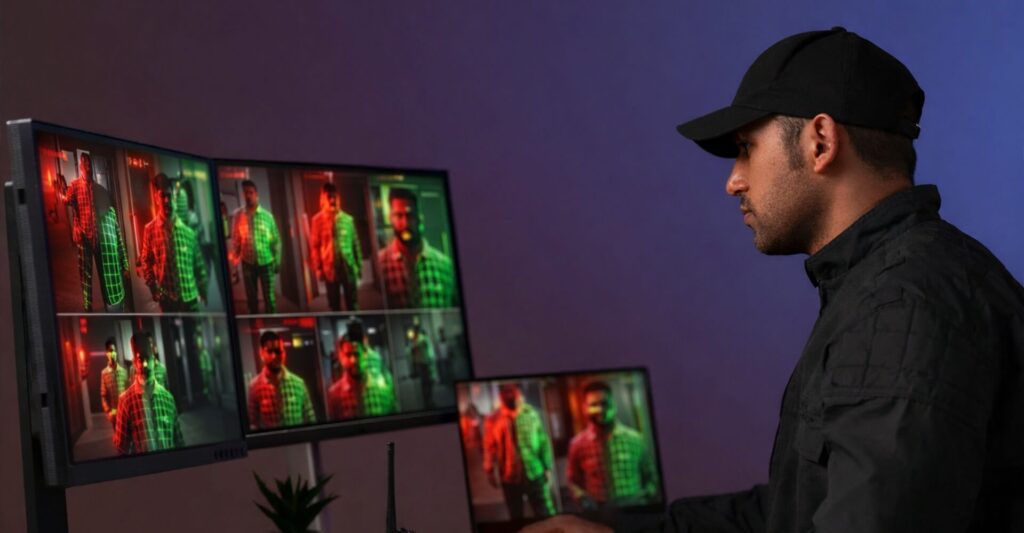
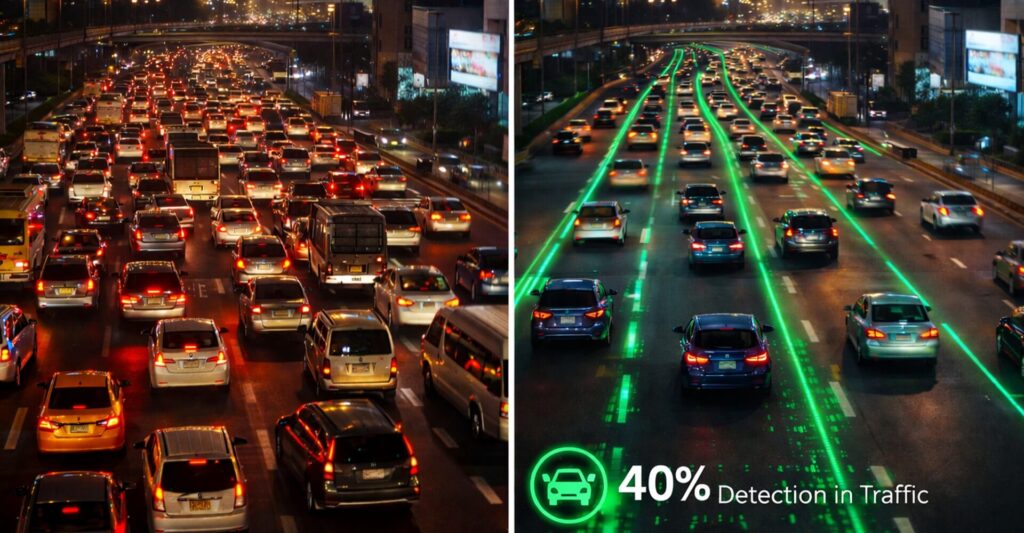
- AI-powered video analytics: Advanced analytics enabled detection of traffic violations, crowd density anomalies, and suspicious activities in real time.
- Incident management workflows: Automated workflows ensured that alerts were routed to the appropriate departments for rapid response and resolution.
- Real-time dashboards and decision support: City officials could access live dashboards displaying key operational metrics, enabling faster and more informed decision-making.
- Field force integration: Ground teams were connected through mobile-enabled workflows, allowing seamless coordination between command center operators and on-field personnel.
- Scalable architecture aligned with Smart Cities Mission: The ICCC was designed to integrate future modules, ensuring long-term scalability and alignment with national urban development goals.
Implementation
Transforming Vision Into a Living Urban System
The project was executed through a carefully structured approach to ensure minimal disruption and maximum adoption.
Phase 1 – Urban Systems Assessment
Magellanic Cloud conducted a comprehensive assessment of the city’s existing infrastructure, identifying key integration points across traffic systems, surveillance networks, and municipal operations.
This phase established a blueprint for creating a unified command architecture.
Phase 2 – ICCC Infrastructure Setup
A centralized command center facility was established, equipped with high-resolution video walls, monitoring systems, and real-time data processing capabilities.
The physical space was designed to function as a 24/7 operational hub for city governance.
Phase 3 – Platform Integration
Multiple systems, including CCTV networks, traffic signals, emergency helplines, and civic databases, were integrated into the Scanalitix platform.
This created a unified data ecosystem capable of real-time monitoring and analysis.
Phase 4 – AI Enablement and Workflow Automation
AI models were deployed to detect patterns and anomalies across the city.
Automated workflows were configured to trigger alerts, assign tasks, and track incident resolution across departments.
Phase 5 – Training and Operationalization
City officials and operational teams were trained to use the platform effectively.
Standard operating procedures (SOPs) were established to ensure seamless coordination between departments.
The Impact
From Reactive Governance to Real-Time Intelligence
Within months of deployment, the city began experiencing measurable improvements across multiple dimensions.

35% reduction in incident response time
Real-time alerts and automated workflows enabled faster coordination between departments.
Improved traffic management efficiency
AI-driven monitoring reduced congestion at key intersections and improved traffic flow.
Enhanced public safety
Continuous monitoring and anomaly detection strengthened law enforcement capabilities.
Better resource utilization
Data-driven insights enabled optimized deployment of field teams and municipal resources.
Increased administrative visibility
City officials gained a centralized view of operations, enabling proactive governance.
Business & Governance Impact
Beyond operational improvements, the ICCC transformed the way the city functioned at a strategic level.
Decision-making shifted from reactive to predictive. Departments that once operated in silos began collaborating through a unified platform. Governance became more transparent, accountable, and data-driven.
Most importantly, the city established a scalable digital foundation capable of supporting future smart initiatives, from environmental monitoring to citizen engagement platforms.
Why It Matters
Urbanization in India is accelerating, and Tier-2 cities are at the forefront of this transformation.
However, infrastructure alone cannot sustain growth. Cities need intelligent systems that can sense, analyze, and respond in real time.
By implementing an ICCC powered by Scanalitix, cities can:
- Improve public safety and emergency response
- Optimize traffic and urban mobility
- Enhance operational efficiency across departments
- Deliver better citizen experiences
- Build scalable, future-ready urban ecosystems
Looking Ahead
As India moves toward its smart urban future, the role of integrated command centers will become increasingly critical.
Cities that invest in intelligent governance platforms today will be better equipped to manage tomorrow’s complexity.
Through its work with this Tier-2 city, Magellanic Cloud Limited has demonstrated how technology can transform urban governance, turning cities into connected, responsive, and intelligent ecosystems.
Discover how integrated command centers can transform urban governance and enable real-time decision-making at a scale.
Connect with our experts to begin your smart city journey.