How a Smart City Operator Improved Public Safety by 45% Using AI-Powered Video Analytics
Overview
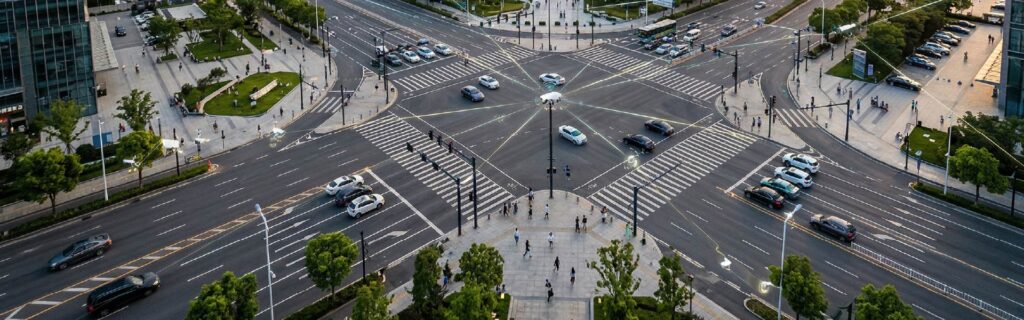
As urban ecosystems grow more complex, ensuring public safety requires more than traditional surveillance-it demands real-time intelligence, predictive capabilities, and scalable infrastructure.
A leading smart city operator partnered with Magellanic Cloud to transform its existing surveillance framework into an AI-driven, proactive public safety system.
The initiative focused on moving beyond passive monitoring to enable faster incident detection, improved response times, and data-driven decision-making across multiple city zones.
The Client
The client is a large-scale smart city operator responsible for managing urban infrastructure, including surveillance systems, traffic monitoring, and public safety operations across high-density zones.
With an extensive CCTV network already in place, the organization had invested significantly in infrastructure but lacked the intelligence layer required to derive actionable insights.
Their priority was to enhance safety outcomes while ensuring scalability and operational efficiency.
The Challenge: Limited Visibility, Delayed Response
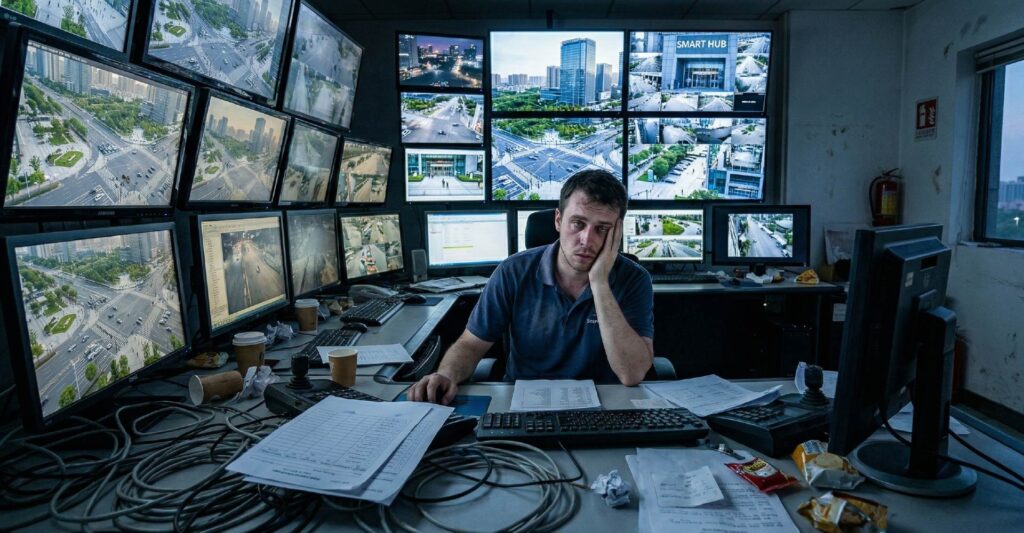
Despite a widespread surveillance network, the system remained largely reactive and resource-intensive.
Key challenges included:
- Delayed incident detection, often after escalation
- Heavy reliance on manual monitoring, leading to missed threats
- Fragmented systems with no centralized intelligence layer
- Limited ability to process and act on large volumes of video data in real time
As urban populations increased, these limitations created critical gaps in situational awareness and response efficiency.
The client needed a solution that could shift their operations from passive observation → proactive threat prevention, while maximizing the value of their existing infrastructure.
The Solution: AI-Led Video Analytics for Smart Surveillance
Magellanic Cloud deployed a comprehensive AI-powered video analytics platform, designed to bring intelligence, automation, and real-time responsiveness into the client’s surveillance ecosystem.
1. Real-Time Threat Detection
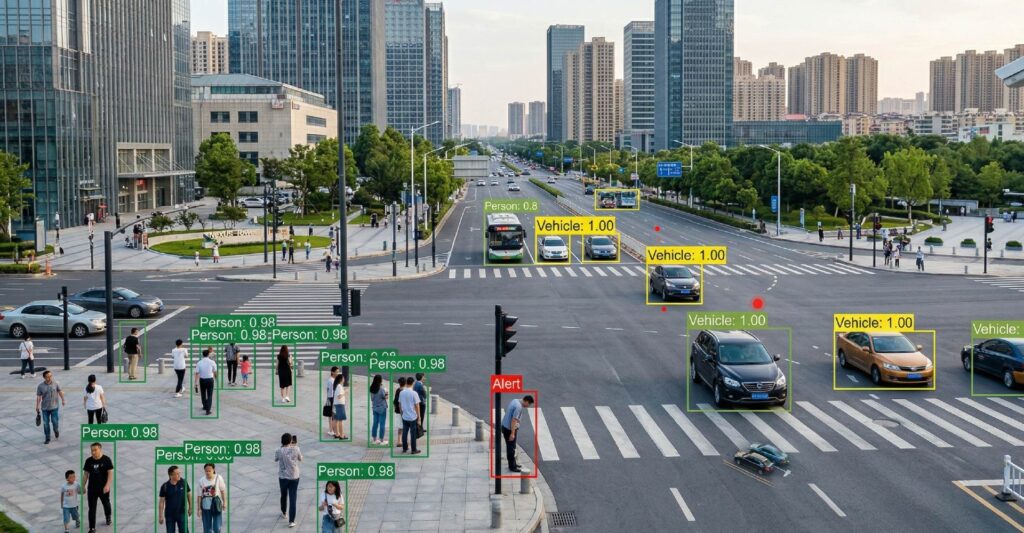
Advanced AI models were implemented to continuously analyze live video feeds and detect:
- Suspicious activities and behavioral anomalies
- Crowd congestion and unusual movement patterns
- Unauthorized access to restricted zones
Traffic violations and safety risks
This enabled instant alerts and faster intervention, significantly reducing response delays.
2. Centralized Command & Control
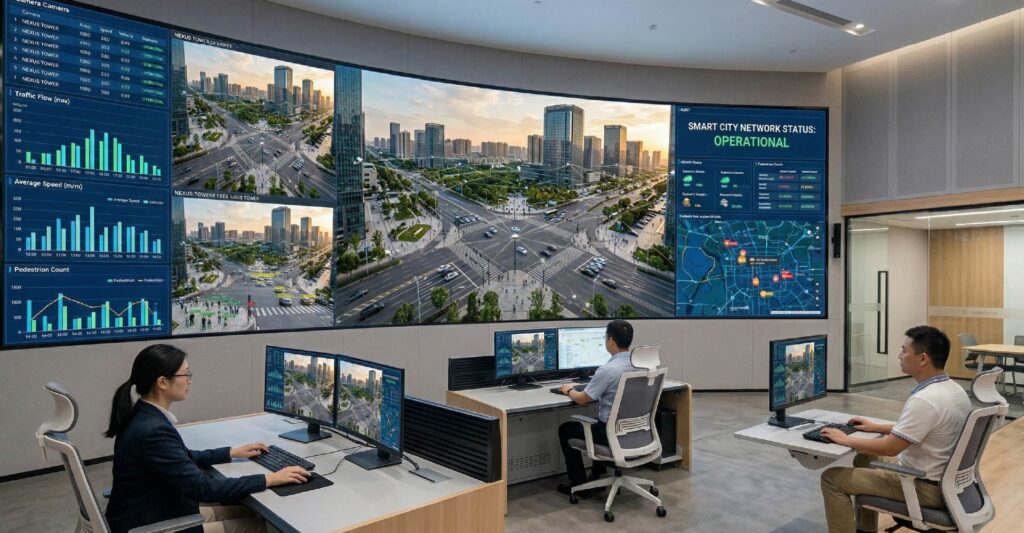
A unified command center was established to:
- Monitor multiple locations simultaneously
- Aggregate video feeds with AI-driven insights
- Provide a real-time operational dashboard for decision-makers
This created a single source of truth, eliminating silos and improving coordination across departments.
3. Intelligent Event Classification
Machine learning algorithms were trained to:
- Distinguish between routine and high-risk events
- Prioritize alerts based on severity
- Reduce false positives and unnecessary escalations
This improved decision accuracy and reduced the cognitive load on monitoring teams.
4. Scalable Cloud-Based Architecture
The solution leveraged cloud infrastructure to:
- Process high volumes of video data efficiently
- Enable remote access and monitoring
- Ensure scalability as surveillance coverage expands
This approach ensured the system remained future-ready and adaptable to evolving urban needs.
The Implementation
Magellanic Cloud followed a structured and phased implementation strategy to ensure seamless deployment:
- Assessment Phase
Conducted a comprehensive evaluation of the existing surveillance infrastructure, identifying gaps in coverage, performance, and intelligence capabilities. - Integration Phase
Connected legacy CCTV systems with AI-powered analytics, ensuring compatibility without requiring a complete infrastructure overhaul. - Optimization Phase
Fine-tuned AI models to align with location-specific scenarios, improving detection accuracy and contextual relevance. - Training & Adoption
Enabled operators and stakeholders to effectively use the platform, ensuring smooth adoption and maximizing system utilization.
This approach minimized disruption while accelerating time-to-value and operational impact.
The Results: Measurable Improvements at Scale
The deployment delivered clear, measurable outcomes across operational and safety metrics:
- 45% improvement in incident response time
- Significant reduction in manual monitoring efforts
- Enhanced accuracy in threat detection and classification
- Improved coordination across multiple city departments
The system enabled a shift from delayed reactions to real-time, data-driven interventions.
The Impact: Beyond Public Safety
While the primary goal was to enhance safety, the implementation unlocked broader strategic benefits:
- Proactive incident prevention, reducing risk before escalation
- Data-driven urban planning through actionable insights
- More efficient resource allocation for law enforcement and city operations
- Increased citizen trust and confidence in public safety systems
The city evolved into a more connected, intelligent, and responsive urban ecosystem.

Conclusion
This case demonstrates that modern surveillance is no longer about visibility alone-it’s about intelligence, speed, and scalability.
By integrating AI-powered video analytics, the smart city operator successfully transformed its operations from reactive monitoring to proactive security management.
As cities continue to grow, such AI-led systems will play a critical role in building safer, smarter, and more resilient urban environments.